

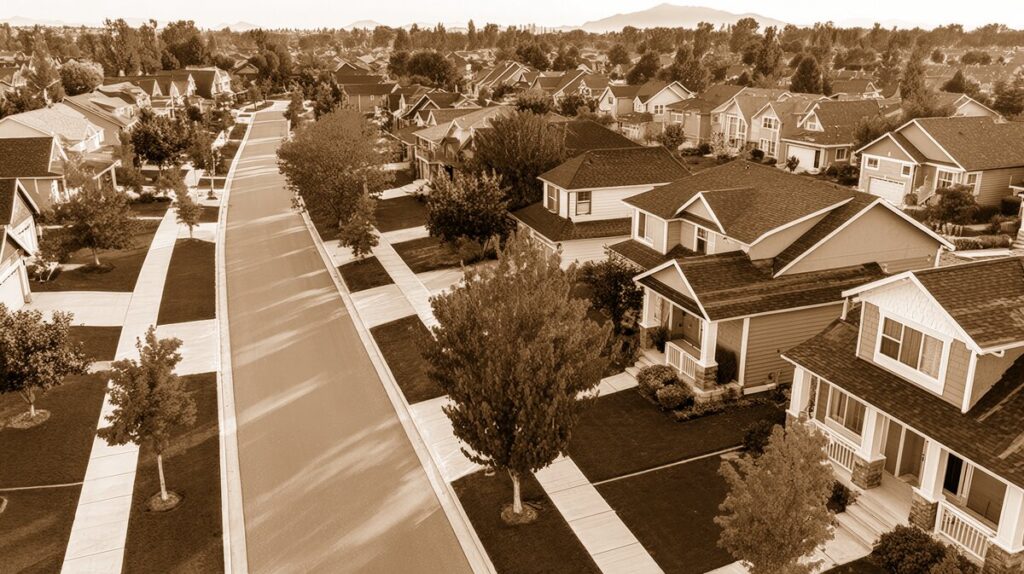
Nestled on the eastern edge of Statesville, North Carolina, the Spring Shore neighborhood stands as a testament to the quiet resilience and deep-rooted heritage that defines much of Iredell County. Generations have watched as this community evolved, always maintaining its particular sense of camaraderie and Southern spirit. From its humble beginnings to its current status as a cherished residential area, Spring Shore holds a unique place in the heart of Statesville.
Origins of Spring Shore
The history of the Spring Shore neighborhood dates back to the early 1900s, when Iredell County was in the midst of agricultural prosperity and the railroad was helping small communities to flourish. Early land deeds indicate the original “Spring Shore tract” was a patchwork of farmland and forest, hugging what is now known as Spring Shore Road. Before city expansion, this region was dotted with small family farms and a few hunting cabins, with the nearby South Yadkin River providing both sustenance and recreation.
The name “Spring Shore” has pastoral roots. Local legend has it that an artesian spring near the northern bend of today’s Spring Shore Road was a gathering spot for families and travelers. The “shore” referred to the sloping banks leading down to the water, where locals would picnic, water their livestock, and share news of the day. This natural feature became not just a watering hole, but a cornerstone of the budding community's identity.
Key Historical Milestones
Spring Shore experienced gradual but steady growth throughout the 20th century. With Statesville’s industry booming in the 1920s and 1930s, more families moved eastward seeking quieter life, filling out the original lanes like Hartness Road and Bost Street. Whereas much of downtown Statesville was bustling with textile mills and furniture factories, Spring Shore offered rolling green space, wide lots, and plentiful gardens—a true slice of rural living mere minutes from the city center.
In the post-war years, particularly the 1950s and 1960s, Spring Shore saw an influx of young families. Modest ranch-style homes appeared along Spring Shore Road and Pinecrest Drive, and a new wave of neighborhood pride took hold. The opening of the Spring Shore Community Park in 1968 was a crowning moment: featuring a playground, walking trails, and a pavilion, it became a centerpiece for reunions, church picnics, and the annual Fourth of July parade.
Notable Landmarks and Institutions
One of the most iconic buildings in Spring Shore is the Spring Shore Baptist Church. Founded in 1923, it's located at the intersection of Spring Shore Road and Bost Street. The church’s stately brick facade and iconic steeple have stood witness to countless weddings, baptisms, and memorials—intertwined with the lives of virtually every family in the neighborhood.
Equally beloved is the Spring Shore Community Park, a magnet for local life. Its shaded groves and open ballfield are filled every season with laughter and activity. Not far, the remains of the original spring—now protected and marked with a historical plaque—can be found just past the park’s eastern gate. Children still love to glimpse the trickle of water that so many generations depended on.
An understated landmark is the old Spring Shore Grocery, a modest clapboard building at the corner of Hartness Road and Spring Shore Road. For decades, it was a gathering point for simple goods, a morning coffee, and neighborly conversation. Though now repurposed as a flower shop, longtime residents smile at the memory of Friday evening ice creams and penny candy.
The Evolution of Spring Shore
Over the decades, Spring Shore has balanced change and tradition with remarkable grace. Streets like Jody Lane and Lynnwood Court saw new homes added in the 1970s and 1980s, as the boundaries of Statesville crept east. Yet the community’s essence—a welcoming atmosphere, respect for greenspace, and tight-knit bonds—remained intact.
As schools in the area grew, so did the neighborhood’s sense of pride, with students attending East Iredell Elementary and Statesville Middle School. Even today, neighborhood events—like the Spring Shore Block Party and holiday light tours—are well attended. The local Heritage Club, founded in the 1990s, ensures that stories from the “old timers” get passed along, keeping memories of the early cabins, the fertile gardens, and the busy days at the spring alive for all.
Spring Shore now enjoys the best of both worlds: peaceful suburban living with easy access to the amenities of Statesville. New residents are drawn to its mix of historic charm, strong schools, and enduring civic traditions. Walking along Spring Shore Road today, you’ll see rescued farmhouses standing shoulder-to-shoulder with newer brick colonials and cottages, forming a patchwork of past and present.
What Makes Spring Shore Special
There’s an unmistakable warmth to Spring Shore that sets it apart. At sunset, neighbors wave from their porches. On weekends, children play under the leafy canopy of Community Park. On holidays, front yards explode in festive color as folks compete for the best decorations.
But more than its pretty streets or venerable buildings, Spring Shore’s greatest asset is its people. Many here are descendants of the first farmers and craftsmen who cultivated both the land and the spirit of the neighborhood. They are quick to share stories, lend a helping hand, and celebrate milestones together.
In Spring Shore, the past is never far. The bubbling spring still whispers at the edge of the park. The echoes of laughter from the old grocery store linger on summer breezes. The roots run deep—anchoring this neighborhood and welcoming future generations home.
Whether you’re an established resident or new in town, Spring Shore continues to embody the best of Statesville: hospitality, heritage, and hope for tomorrow.